The starting point
Keep a large store organised and identify changes that matter to both customers and the team running sales.
E-commerce / Cosmetics
A store I work on day to day.
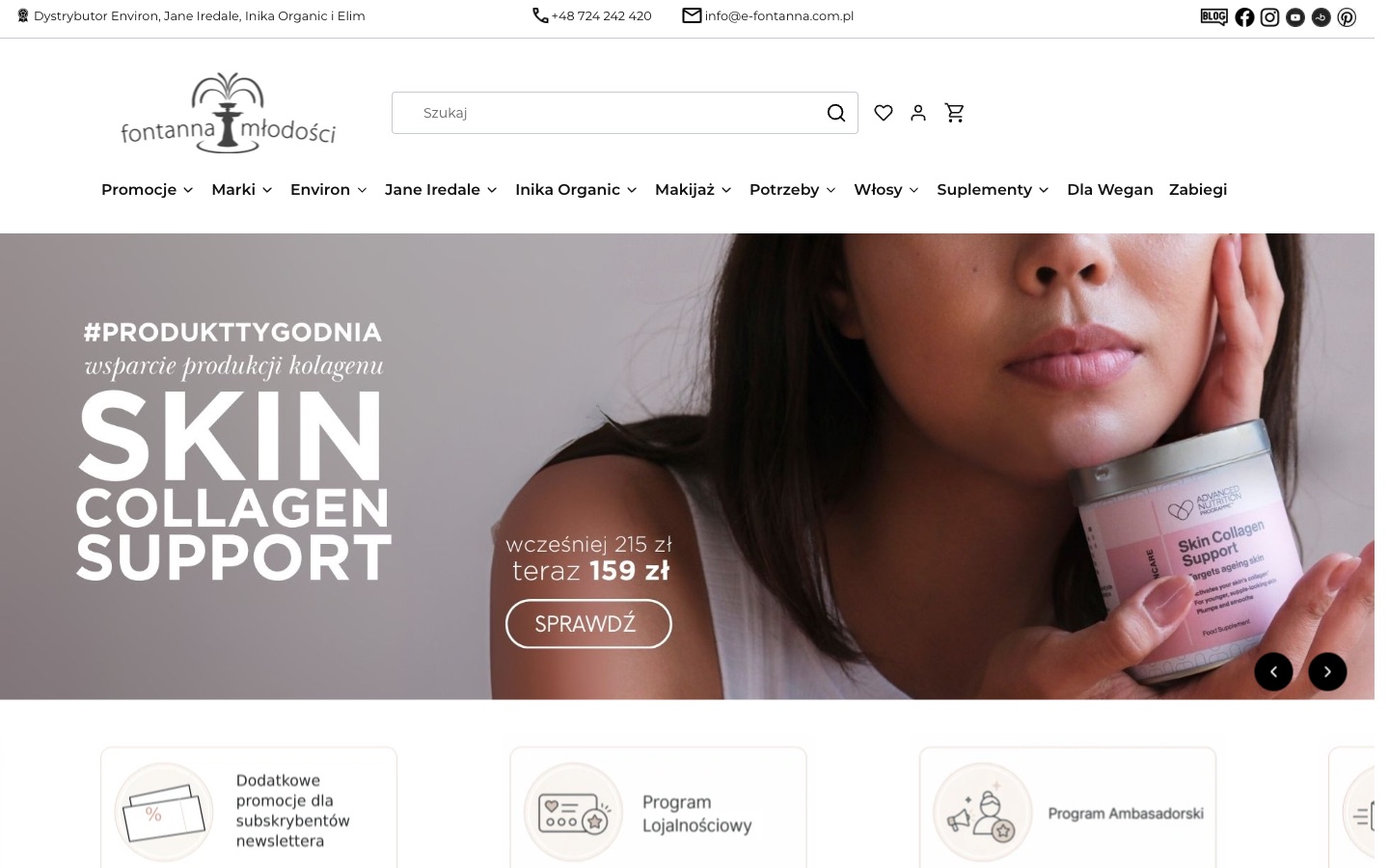
Recording of the actual website.
Project story
For e‑Fontanna, I work on the daily operation of a large store and the decisions behind its further development. I connect reporting with checks of SEO, links, delivery and the purchase journey, as well as preparation for the season. I implemented some changes; other work concluded with an audit and a concrete task list for the team.
Keep a large store organised and identify changes that matter to both customers and the team running sales.
I handle technical SEO, shopping-experience audits, reporting and planning further improvements. I develop the existing store.
A check of the public sitemap in the full audit of 4 October 2026.
The pre-season plan contains specific actions and criteria for checking them.
Reporting uses the same definitions of orders and value across several stores.
My work on the project
e‑Fontanna was included in the order-reporting mechanism under development. Daily and monthly summaries make it possible to check orders, their value and unit counts without manually combining several exports. Cancelled orders do not increase the result, and the data can be compared with the other stores using the same counting rules.
I checked the role of category pages and their availability to customers and crawlers. Once the scope had been agreed, I introduced a conditional noindex rule for precisely specified routes. I also checked that other categories were unaffected. I treat an indexing decision as a deliberate change to a specific page, rather than automatically excluding an entire group.
I verified lists of historical errors and old URLs. I separated pages still returning 404 responses from working redirects and loops. I then checked the links customers can click today, because a historical Google report does not describe the whole current website.
I prepared a spreadsheet with priority, incorrect target, source page and recommended action. One stage identified 16 broken content links and one loop in the menu. I separated technical URLs from the delivery module from the main shopping links. The audit produced a repair plan; the recommended redirects still require a separate implementation.
I compared Search Console data, material from previous audits and the actual linking pages. I checked both link targets and sources. The result did not provide grounds for mass link disavowal. Instead of an automatic operation, the outcome was a report, a spreadsheet and a recommendation to monitor specific sources.
I analysed DHL collection-point selection and the flow of order data into BaseLinker. I separated the collection-point map in the basket from label generation in store operations. I identified the integrations that required checking and the necessary test of collection-point data. This stage prepared the solution; full compatibility of the flow still requires confirmation.
I went through the home page, categories, search, a product page, cart, discount, delivery options and order form, including on a phone. I checked whether payment and delivery information was consistent across pages. The test ended before placing and paying for an order, and I removed the test products from the cart.
The full review covered promotions, prices, form consents, purchase information, the opening mobile view and 883 URLs from the sitemap. It produced a list of 15 prioritised tasks with criteria for checking them. A separate comparison of the purchase experience with Topestetic helped identify where a clearer product page or matching accessories could make the decision easier.
I compared order periods and availability with the previous year's Black Friday. The plan distinguished demand, fulfilment status and the stock shown in the system. It identified products to discuss and a method for calculating opening campaign stock. Reservations, physical inventory and deliveries still have to be checked before approving a purchasing list. Commercial data remains outside the public portfolio.
Development of e‑Fontanna order summaries alongside the other stores.
Category checks and a controlled change for the agreed URLs.
Audits of URLs and the link profile, with result spreadsheets prepared.
Analysis of the pickup-point map and the data required by BaseLinker.
Checks of content links, mobile shopping, delivery options and the cart.
Promotions, consents, shopping, the sitemap and a comparison with Topestetic.
Analysis of order periods and availability, plus a schedule of subsequent actions.
The next stage is to implement the agreed priorities and check the purchase journey again after the changes. Any effect on conversion can only be assessed after implementation and measurement.